Design
MySpeaker
A fictional object: a speech-generating mask that reads its wearer's brain signals and says out loud what they can't.
- Role
- Design coursework
- When
- Spring 2025
- Methods
- Research
- Sketching
- Paper prototyping
- Physical prototyping
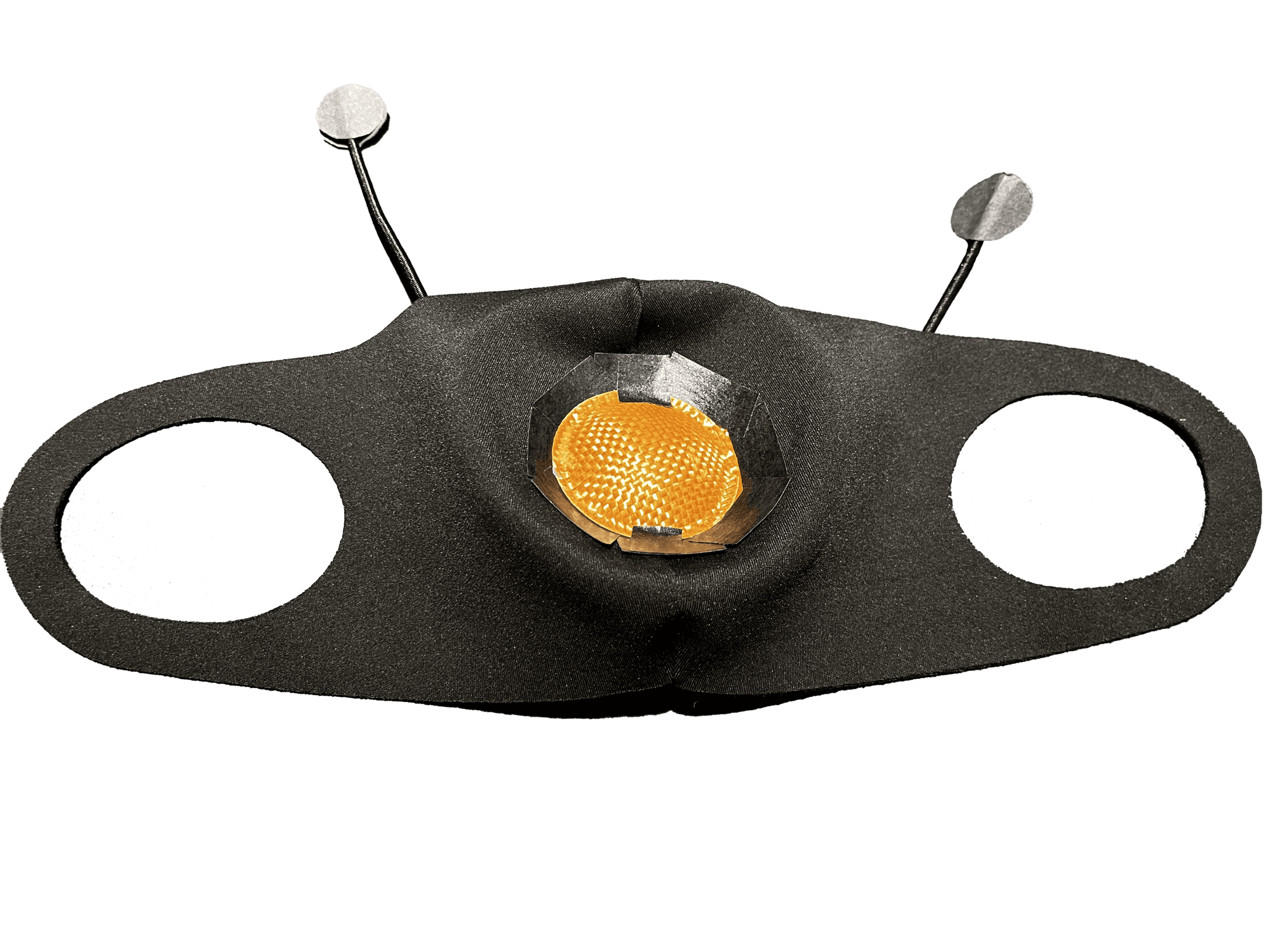
Have you ever had the feeling the word is lingering on the verge of your mouth, but you just can't spit it out? MySpeaker will speak for you.
MySpeaker is a speech-generating device in the shape of a mask. It's designed for people who can't speak, have difficulty in conversations, aren't confident in their talk, or want to speak but can't speak out for some reason. The device reads brain waves through two electrodes, translates them into audio signals, and plays them through the speaker on the front.
Starting from my own objects
The project began with research into three objects from my own life: what each one is, and what it means to me.
Earplugs
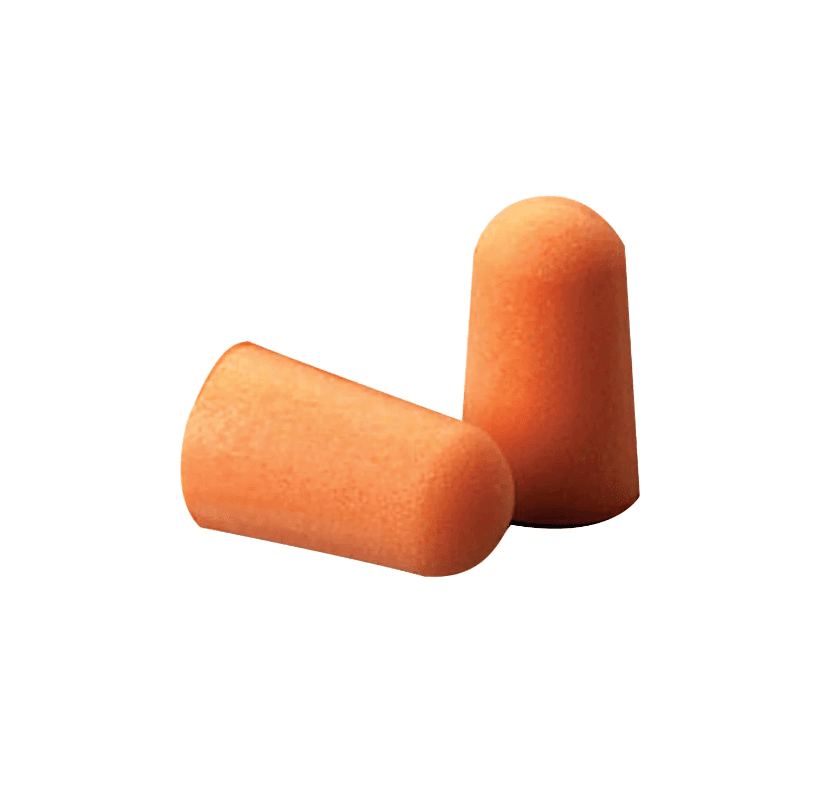
The object has a soft form with no sharp edges. It is made of fluffy memory foam. The foam is molded into this shape. It is designed to be compressed into any shape and put into the ears. Then, it is able to recover to its original shape. One encounters this object somewhere near the pillow. It arouses a gentle, tender experience which facilitates sleep.
I'm very susceptible to insomnia. I wouldn't be able to sleep if I heard a little voice, especially snoring. Unfortunately, my roommate snores. He always sleeps before me and stops me from sleeping by snoring. A pair of earplugs is necessary for me.
A pen
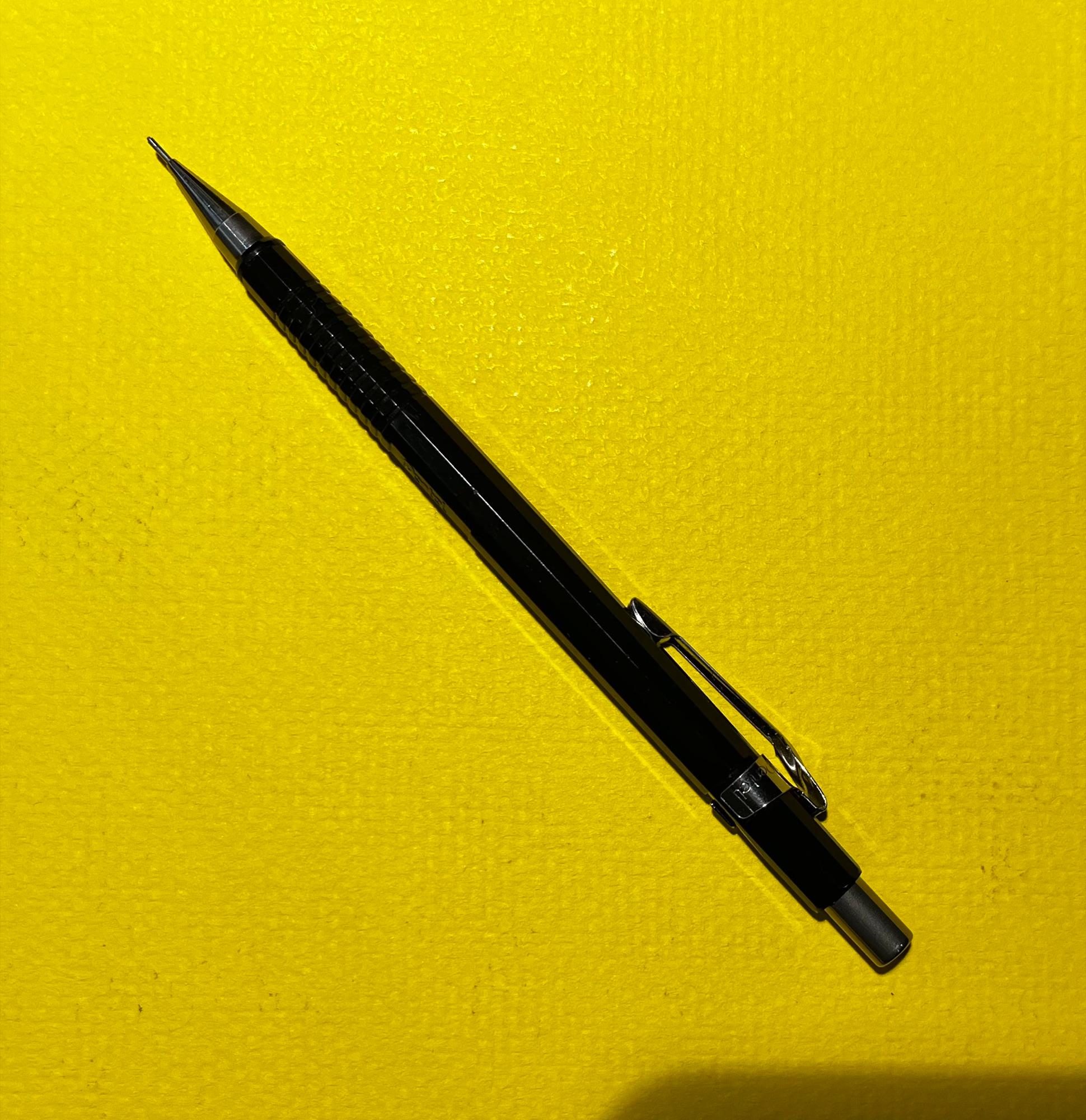
The object takes an elongated form with a sharp head. It is made of light metal, very light and portable. It is created by filling the shell with carbon refill. It allows the users to focus on its sharp head. All of its design flows towards the head. One encounters the object anywhere: writing, creating, recording etc. It offers a flexible experience: you can use it to do anything and create anything.
When I was young, I used the object to randomly scratch figures and symbols out of my imagination. When I was older, I tended to use it to express my thoughts and personality since I don't like talking. I also use it to record some weird vision or dreams I encountered. It is like an alternate way to express myself.
The mouth
This object has a long curvy seam in the middle and an enclosed form. It's made of stretchable and compressible materials. It's meant to be opened, like a door. Someone won't encounter the object, or even feel its existence. It's a part of them and they have been one since they were born. Others need to read its manual, fearing that it would break. It is an amplifier of emotions and the major way for me to attain social experience.
I'm unsatisfied with my articulation. I'm used to talking to myself at a low volume only I could hear. I'm also used to using this volume when I'm talking to other people. Meanwhile, the pitch of my voice is also very low. I often feel that I can't express what I want to say. When I bring up a conversation, people usually respond: "What did you say?" This object shaped my personality as it is now.
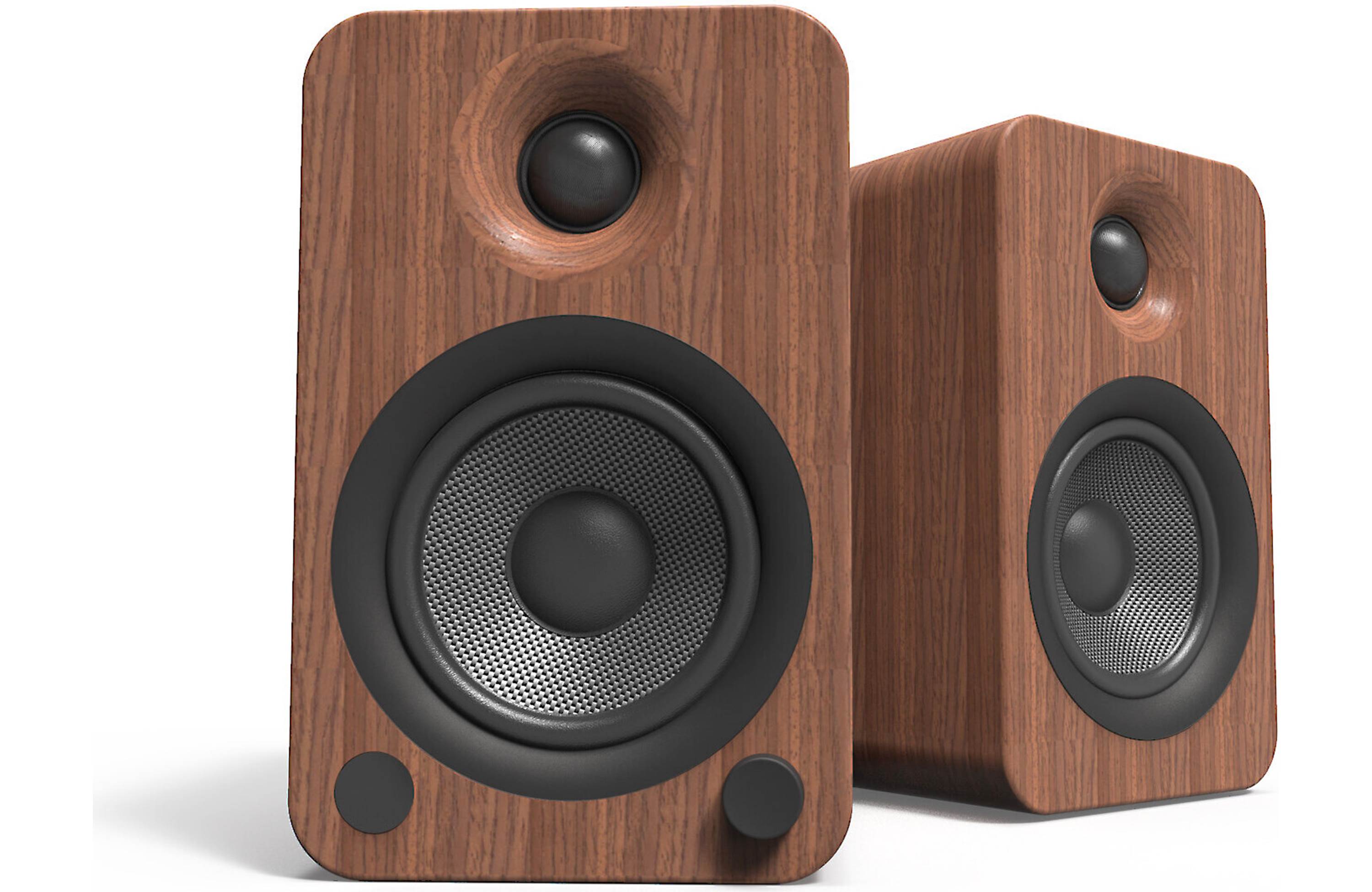
References and sketches
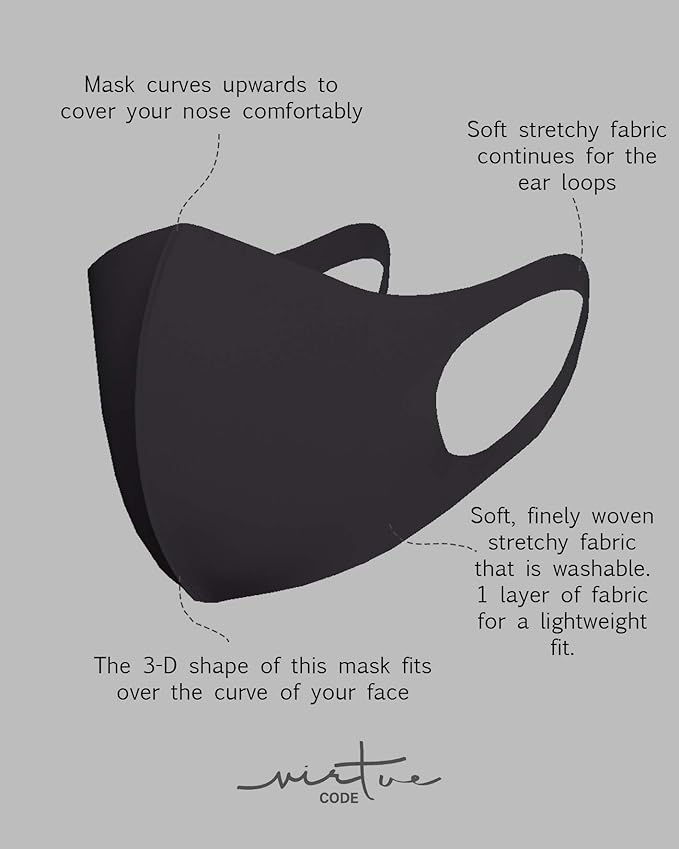
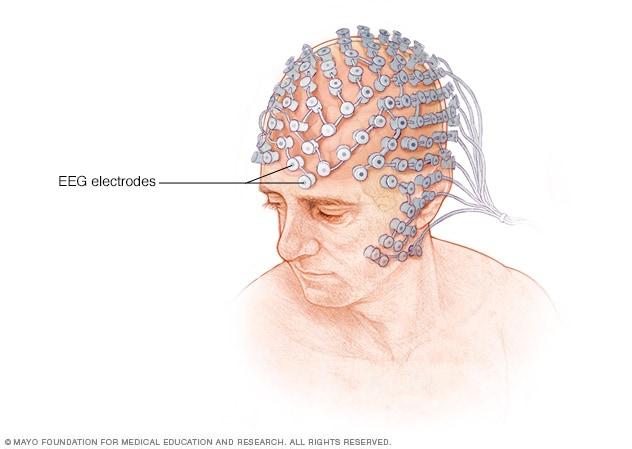

The proposal
- Audience
- People who can't speak, have difficulty in speaking, or aren't good at communication.
- Form
- A black mask made of lightweight fabrics.
- Material
- Mask: fabrics. Speaker cone: polypropylene.
- Appeal
- Designed to be convenient, accessible, and natural.
- Purpose
- Helps users express their thoughts loud and clear through brain signal interpretation and speech.
- Message
- The product is an alternative method for communication.
- Location
- Used mainly in casual conversations.
- Usability
- Lightweight, portable, and easy to use.
- Technique
- Receives brain signals, interprets them into words, and outputs them through the speaker.
The major form of this product is a black mask made of fabrics. A speaker cone is installed on the mask and made of light polypropylene materials. This material is advantageous for its lightweight. Two electrodes stretch out from the mask and are used to attach to the users' head. All electronic units are connected to an embedded mini computer. This product is designed for people who can't speak, have difficulty in speaking, or aren't good at communication. It helps the users express their thoughts loud and clear. There have already been technologies with this functionality, like speech generating devices. Stephen Hawking had this device installed on the wheelchair. This product, however, will be more convenient and accessible.
The product completes its task in the following process. First, listen to the user by receiving the users' brain signals from the electrodes, just like what happened in EEG. These electrodes are much more powerful and resistant to noises. Second, understand the user: the computer interprets the signals into semantic words and translates them into voices. Third, speak: the speaker outputs these words. Users may use it mainly during normal conversations and sometimes official occasions like public speech or presentations. The product is designed to be light and portable for the users' convenience. The mask-like appearance and choice of voiceline intends to be as natural as possible to reduce the users' burden of using this product.
However, some elements of this product still look unnatural, like the most predominant speaker. It looks like a strange mouth that can't be closed and is maybe screaming or appealing. The metallic texture of this mouthpiece also alienates from the original, organic mouth. This product reduces the experience of human speaking, which is an important portion of human experience. All of these convey a message that this product is still an alternative method.
Storyboards

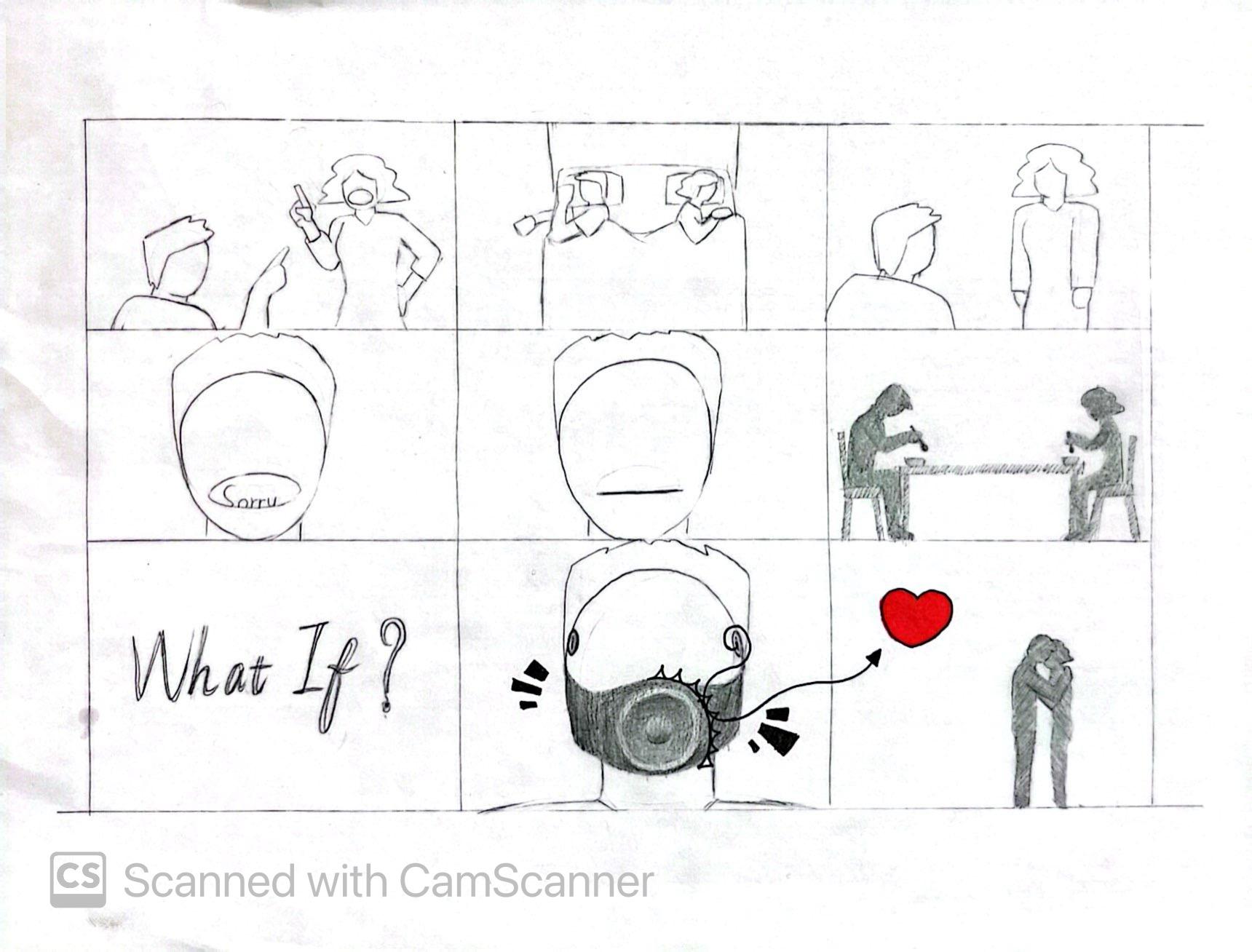
Prototyping

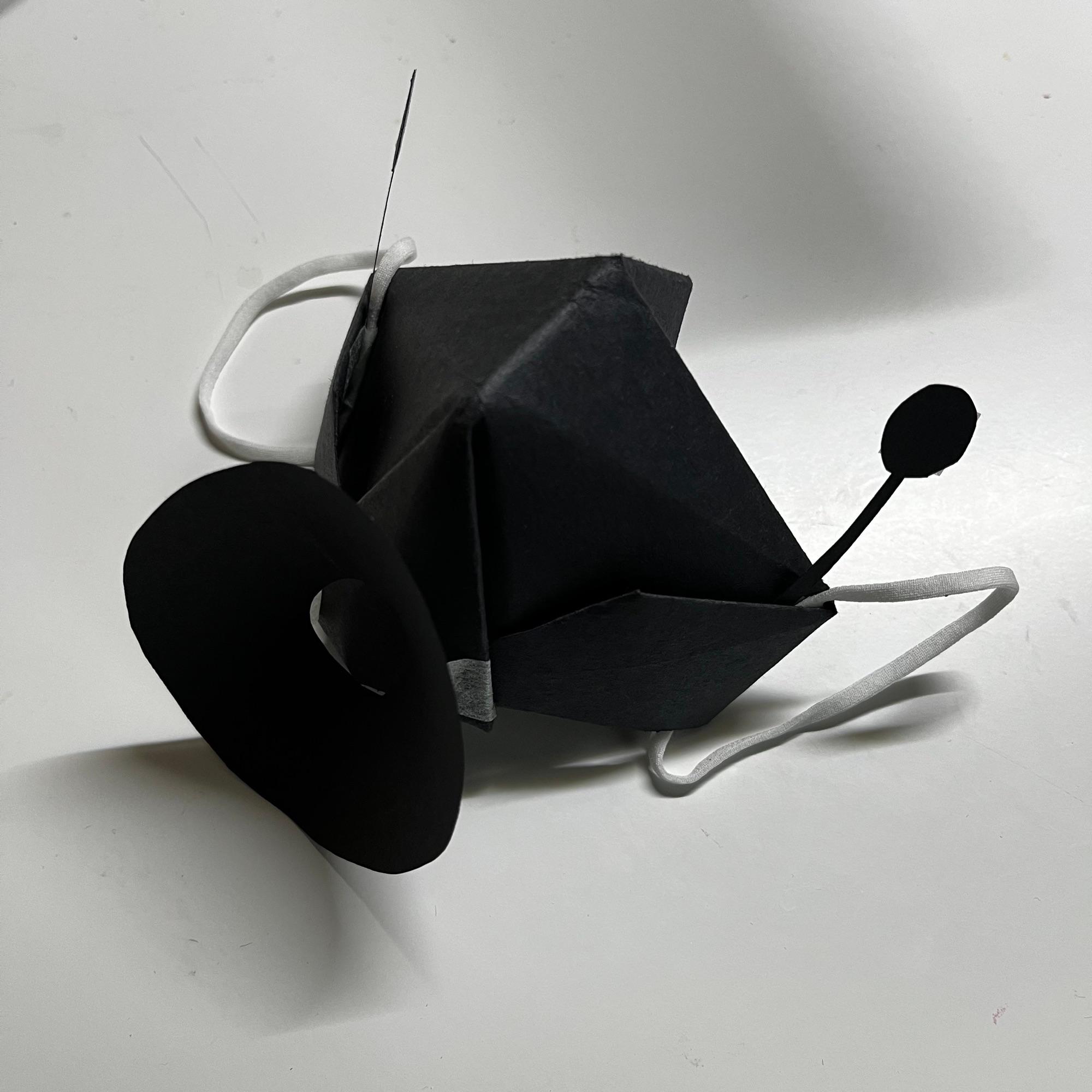
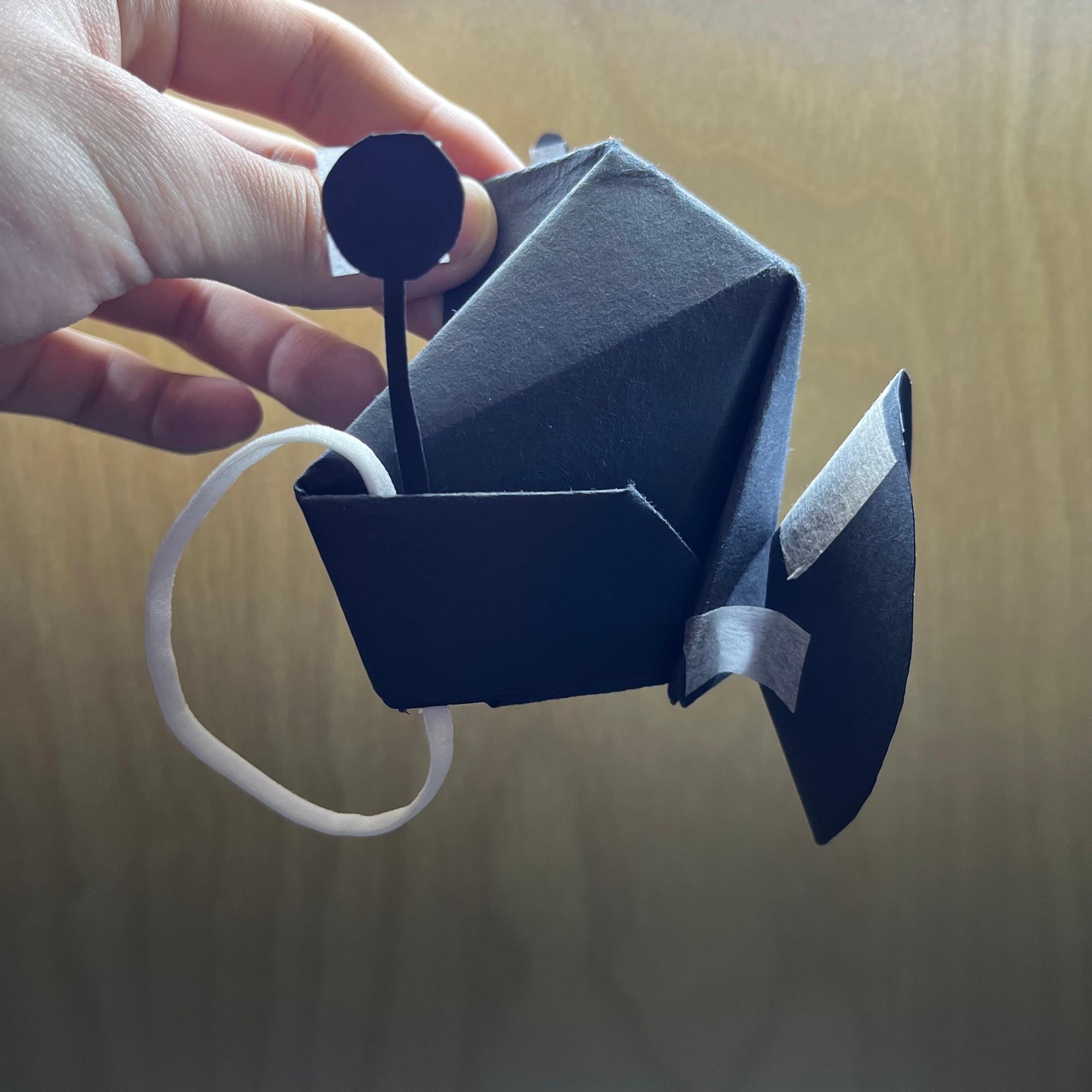
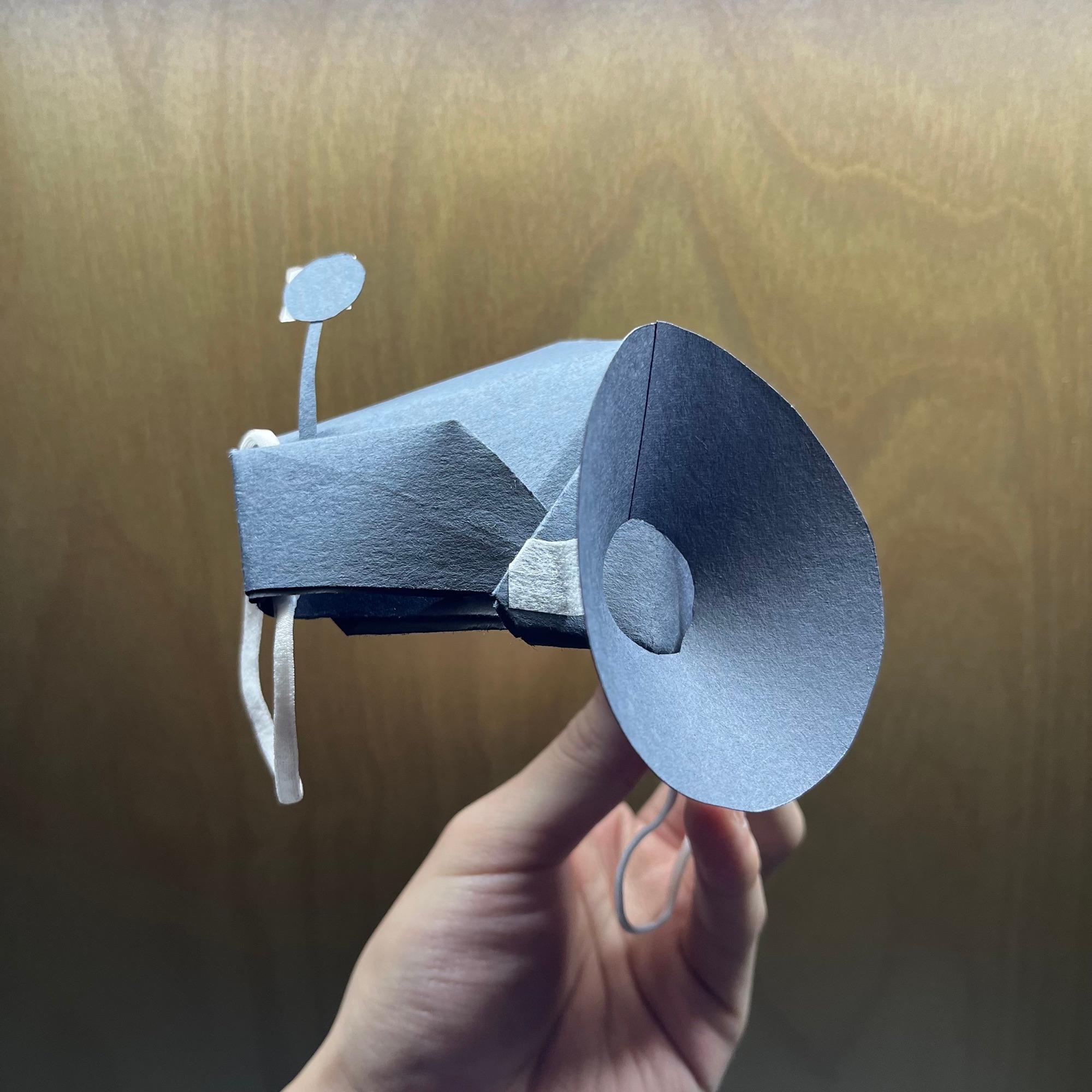
Paper prototype. Completely made of paper. It pins down the final shape of the product. The only difference is that the speaker size is too big.
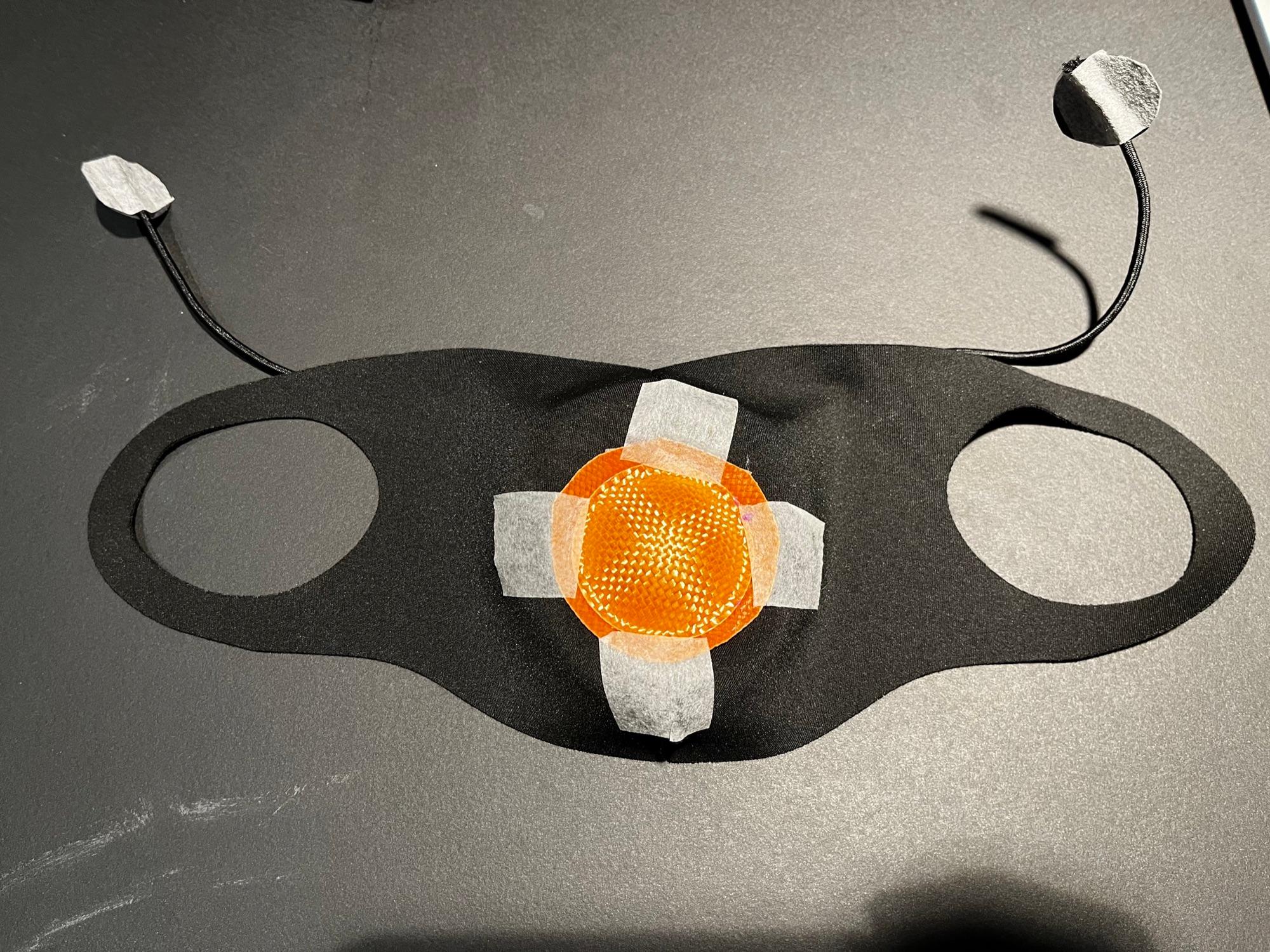
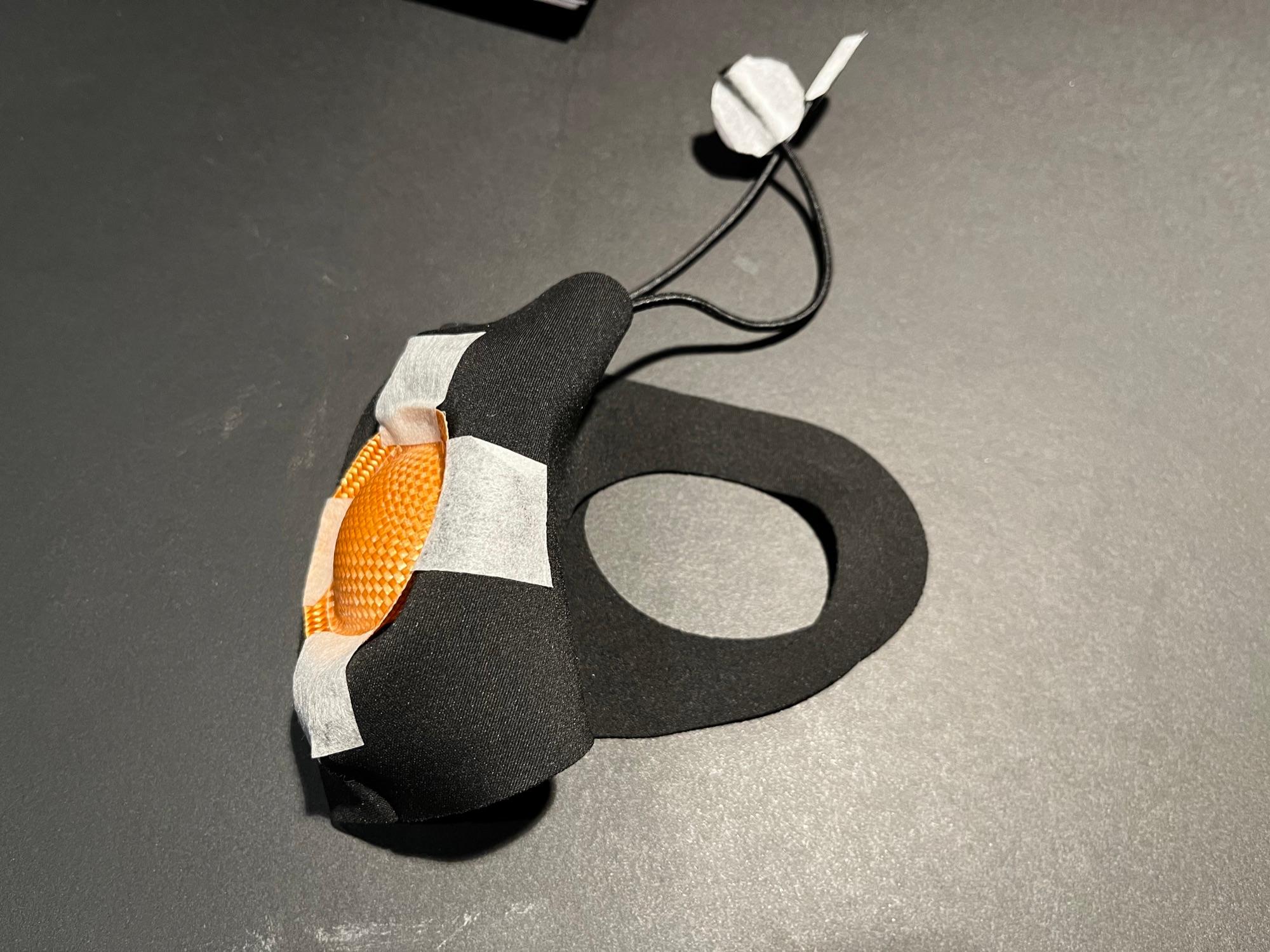
First iteration. Very close to the final one. The mask is made of soft fabric materials. The wires are elastic cords used for chargers. The cone is torn from a real speaker. If you believe it.
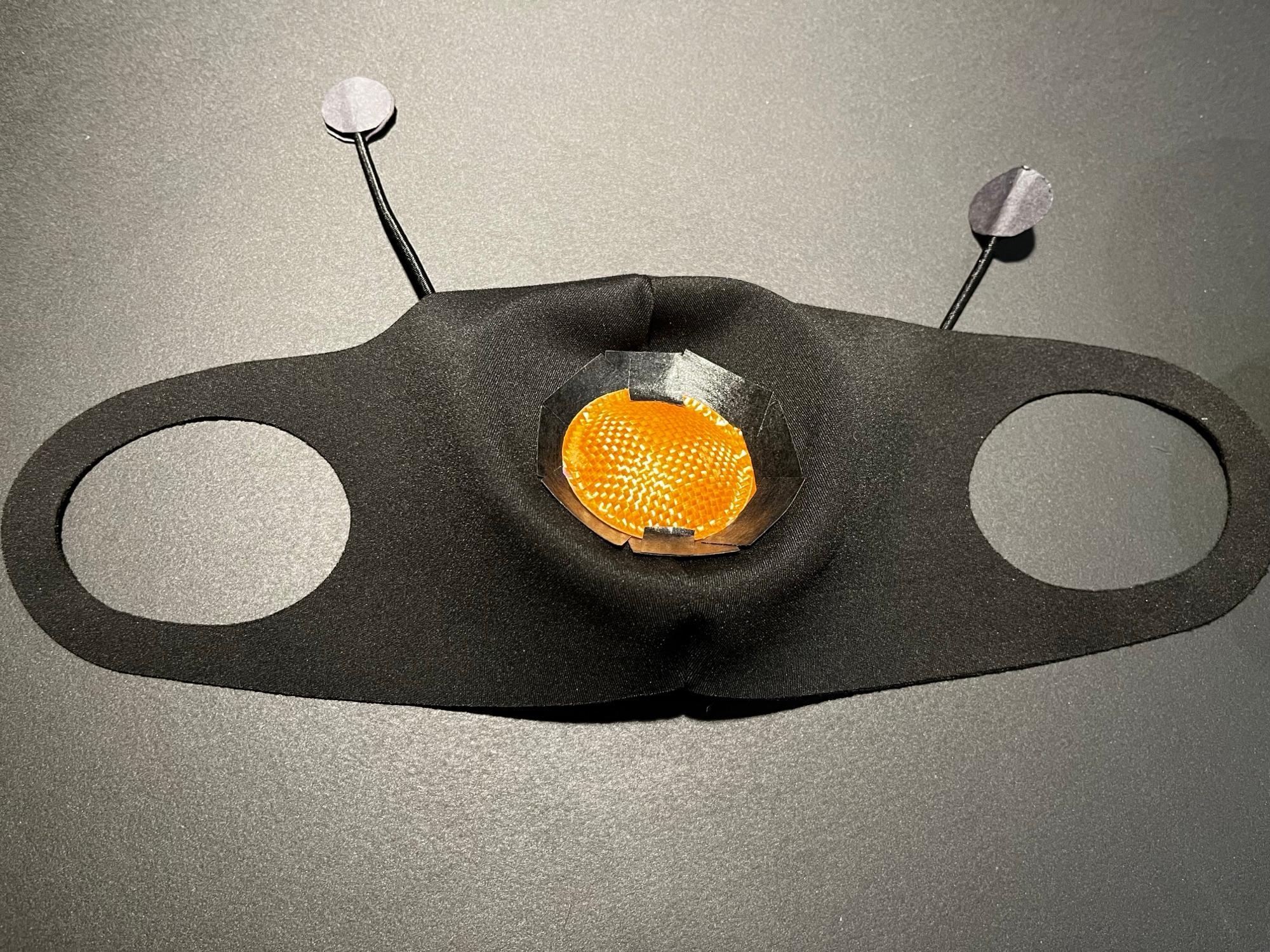
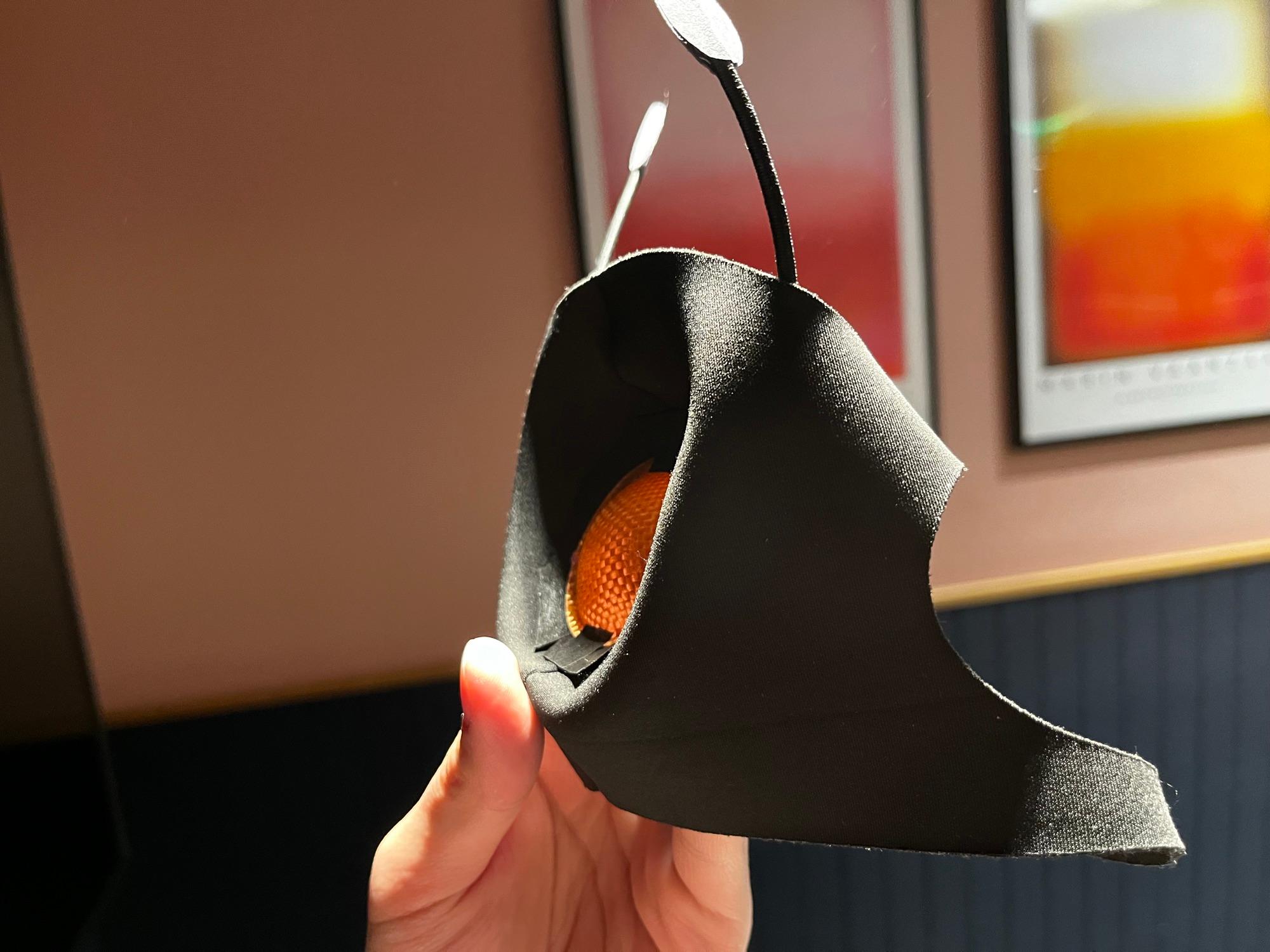
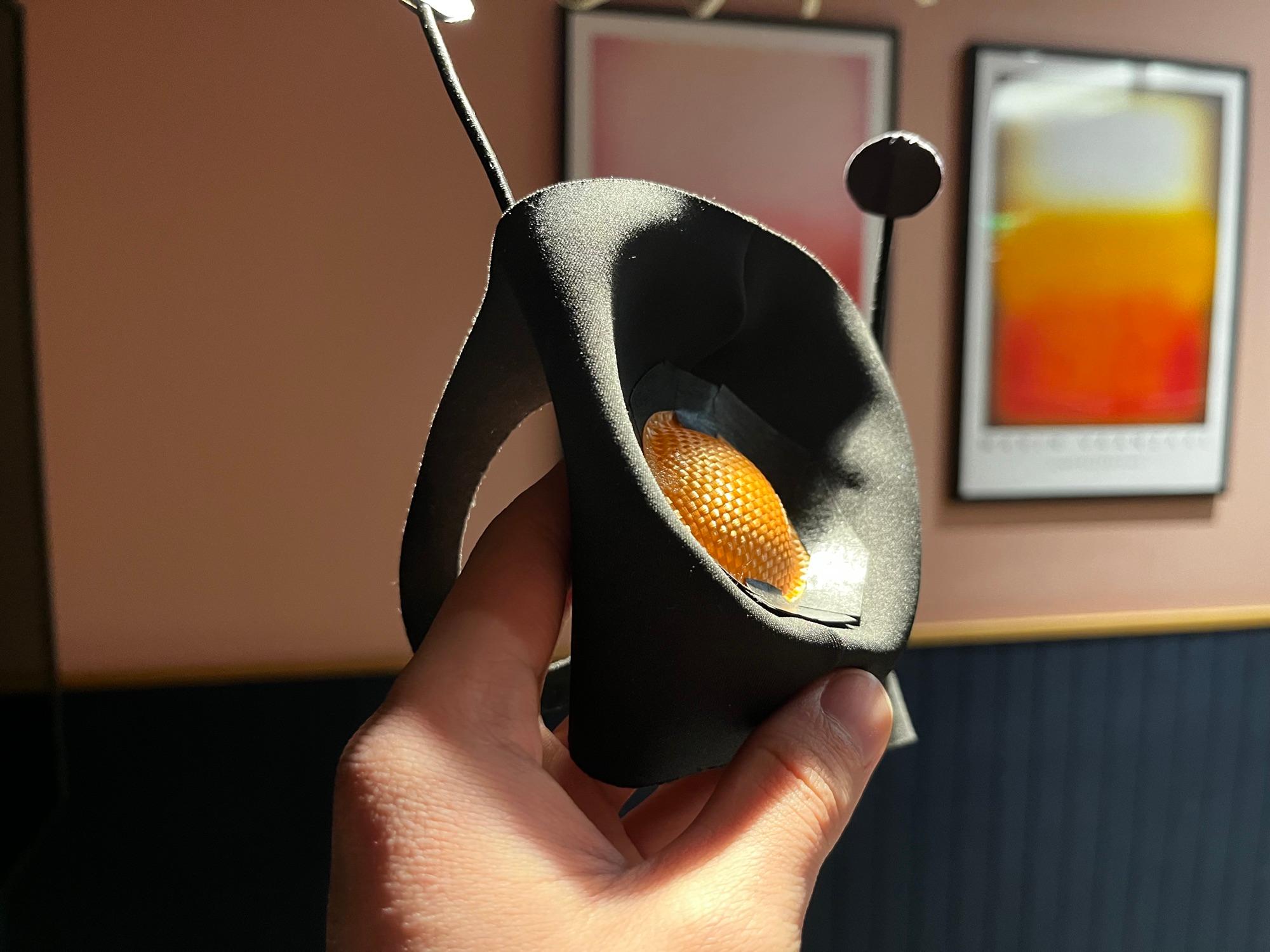
Second iteration. Improved some details on the first iteration. Sealed the speaker's edges with black tape and shortened the wires. The product now looks more fluid and polished.
The final object
- Audience
- People who can't speak, have difficulty in speaking, aren't confident with their voices and speech, or can't speak for other reasons.
- Form
- A black mask with a noticeable microphone speaker on the front. The "mouth" is designed to differ from a real mouth to avoid the uncanny effect.
- Medium
- The priority is lightness. We used a paper cone for the speaker and soft, breathable fabric for the mask, which reduced the weight and also the cost of production.
- Appeal
- MySpeaker is an assertive product with strong personality. It voices for the voiceless.
- Message
- MySpeaker is intended to be noticeable, in line with the principle of disability visibility.
- Usability
- The user can use MySpeaker as a normal mask in normal life without any obstacles. It is convenient and waterproof.
- Technique
- MySpeaker fetches the user's brain signals from the two electrodes. A micro-computer in the device translates the signals into words and outputs them through the speaker.
Functional value
It helps the users to regain or enhance their speech. Communication is a large part of life and is associated with tons of experiences and opportunities. However, you can't see the other side of the door without the key. MySpeaker can hand this key over to the users.
Supplemental value
MySpeaker redefines the user with an articulate and characteristic voice. The users usually report that it boosted their confidence and sense of existence among the group. Someone even said that it gave them another personality.
Admirable value
MySpeaker captures the balance between small and big, natural and mechanical. It isn't too alien or bulky so the user can use it seamlessly in daily life. On the other hand, we tried to create an assertive product that makes up for its owner's voice. Both its shape and its voice are recognizable. We also avoided it being too natural and uncanny by adding some mechanical shapes. In fact, some kids bought this product just because it looks cool like a robot.
NeuroVoice, the companion app
To complete the fiction, MySpeaker comes with NeuroVoice, a companion app for choosing a mode, watching brain activity, and setting the volume and language. Try the NeuroVoice concept.
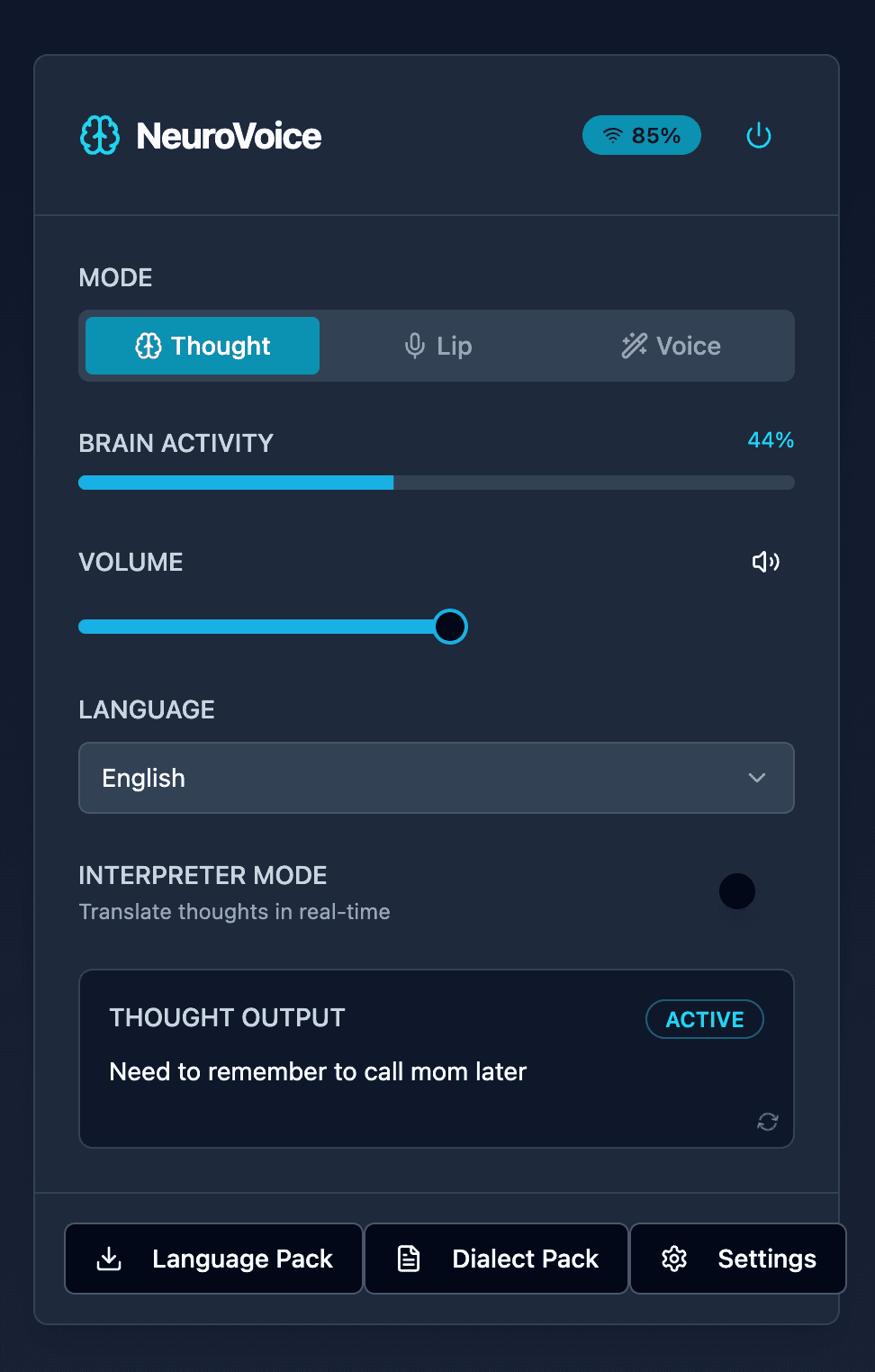
Mask on, mask off. With MySpeaker, you might not be anyone, but you will be yourself.
Bibliography
- Speech Generating Devices. BlueCross BlueShield of South Carolina. southcarolinablues.com. Accessed 28 Jan. 2025.
- Electroencephalogram (EEG). Johns Hopkins Medicine. hopkinsmedicine.org. Accessed 28 Jan. 2025.
- Types of EEG Electrodes: Gel, Water, and Dry. TMSi, 21 Apr. 2022. info.tmsi.com. Accessed 30 Jan. 2025.
- Loudspeaker Materials 101: The Cone. MISCO Speakers, 5 Oct. 2021. blog.miscospeakers.com. Accessed 30 Jan. 2025.